
On Monday 11th September, Antonia Liguori (Loughborough University) and Sharron Kraus (folk singer and songwriter) will be giving a talk at the “Narratives and Alternative Stories” Conference at the University of Chester on behalf of DRY Project.
The title of their paper, written in collaboration with Professor Mike Wilson and Dr Lyndsey Bakewell, is: From Personal To Collective: Singing Water Stories In the UK. Exploring Environmental Narratives Through Digital Storytelling and Songwriting in DRY Project.
This paper will explore how storytelling and songwriting can work together to facilitate the journey from personal to collective, or what Jerome Bruner described as turning ‘private trouble into public plight’, which supports the generation of environmental narratives that influence decision-making processes.
It will draw on micro narratives, digital stories and oral histories collected through the Research Councils UK ‘Drought Risk and You’ (DRY) project and include two songs composed to reflect on and encapsulate these stories. It will consider questions such as how to connect individual stories to community narratives; how to bridge expert and lay knowledges and bring unheard voices into a debate; how to understand how personally meaningful stories can simultaneously have a social impact.
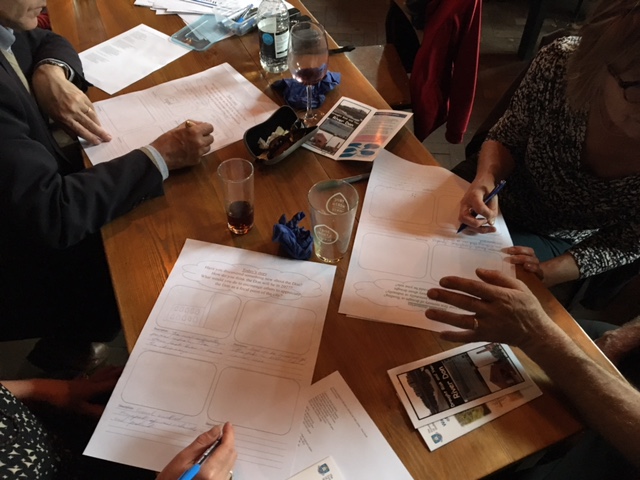
As part of the public engagement events organised by DRY Project, our team has had a chance to experiment with a variety of s torytelling approaches. In this paper Antonia Liguori and Sharron Kraus will compare two separate events, one organised in rural Cambridgeshire – ‘The Reasons in the Fens’ – based on a traditional form of conflict resolution applied in Sardinia (Italy) until the late 60s; and another in Sheffield – ‘Water Stories of Sheffield‘. In both cases storytelling practices were combined with songwriting to trial a creative process that enables individual storytellers to ‘see’ their thoughts, feelings and concerns translated into and represented by a ‘community song’.
This paper will be a performative presentation, drawing upon the form of the ‘Radio Ballad’, in which micro-narratives captured during the events will interweave with the two songs inspired by those narratives.